

Move with Joy


Move with joy, not guilt.

Movement is a gift, not an obligation. It is a way to connect with the body, to release energy, to find strength and lightness—not a way to punish ourselves. When we move with joy, the whole tone changes: we listen to the body instead of beating it up.

Change in attitude

We often associate exercise with “needs” or “obligations.” We tell ourselves that we have to go to the gym, go for a run, or do some exercise that we might find boring. But when we turn it around and ask, “What would my body want today?” the energy shifts.

Some days call for stillness — walking slowly, stretching, or doing yoga. Other days offer energy — dancing, running, or a workout that really challenges you, and that's awesome! But the important thing is that the movement is in harmony with your energy, not against it.

Body awareness instead of discipline

When we listen to our bodies, we develop body awareness. This means we notice its signals: tension, fatigue, energy, or joy. This connection is the foundation of holistic health.

Discipline is sometimes misunderstood. Discipline doesn't have to mean stubbornness. True self-discipline is about respecting and listening to the boundaries that our bodies set for us. When we respect our bodies with love, the desire to exercise naturally grows. This doesn't mean we should stop exercising, but rather listen to what my body wants and can tolerate today?

Movement that nourishes

Choose exercise that nourishes, not drains. Exercise that makes you smile and feel good, not burn out.

Ideas for joy-based exercise:
– Dance at home to your favorite song, it can be a great idea to create a short playlist with about 4-5 songs that you love to dance to. Each song is about 3 minutes long and with 5 songs you have 15 minutes of gentle dance flow! Sometimes there are also days where one song is enough, then that's okay.
– A walk in nature with conscious breathing, so-called “slow pace” walks or walks without tearing the puzzle apart is sometimes what is needed. You can also take vigorous walks in nature or even with a slight elevation or mountain hike, whatever serves you that day.
– Yoga, stretching or Yin yoga for those days when you crave calm. Stretching is good for releasing accumulated tension in the body, and long yin yoga stretches, which are about 3-5 minutes long, help you release tension all the way down to the connective tissues of the body.
– Swimming or cold sea baths for rejuvenation. Swimming is an exercise that most people can do. Whether you swim a few laps of breaststroke slowly or do a vigorous freestyle workout.
– Exercise with your children or pet – Go outside to play! Exercising with children can be a lot of fun, going out together on a playground, playing chase, playing hide and seek or going for a walk in nature. Most children also love swimming. You can also take our four-legged friends for a walk. There is often also a social aspect to going out with your dog, because then you often meet other dog people, people stop and chat and that can form a bond.

When we associate joy with exercise, it often changes from a task that needs to be completed to a fun daily routine. A good goal is to aim for 20 minutes of some kind of exercise a day.

Exercise as self-care with gratitude

In a holistic approach, exercise is not only physical but also spiritual. It is our way of activating energy, clearing the mind, and finding inner peace. After exercise, you can pause, close your eyes, and say, “Thank you, body, for carrying me through the day.”

This kind of gratitude for ourselves strengthens the connection between body and mind, and that's often where real good health begins.

🌺

When we let go of the need to “perform” in exercise and start moving with joy, everything can begin to change. We become free, our energy flows, and we begin to feel good physically. It is then that we begin to see exercise as a part of life itself and not something we are forced to do out of a sense of duty.
Forest Bathing and Forest Therapy — When Nature Becomes Healing

When nature becomes more than just a place

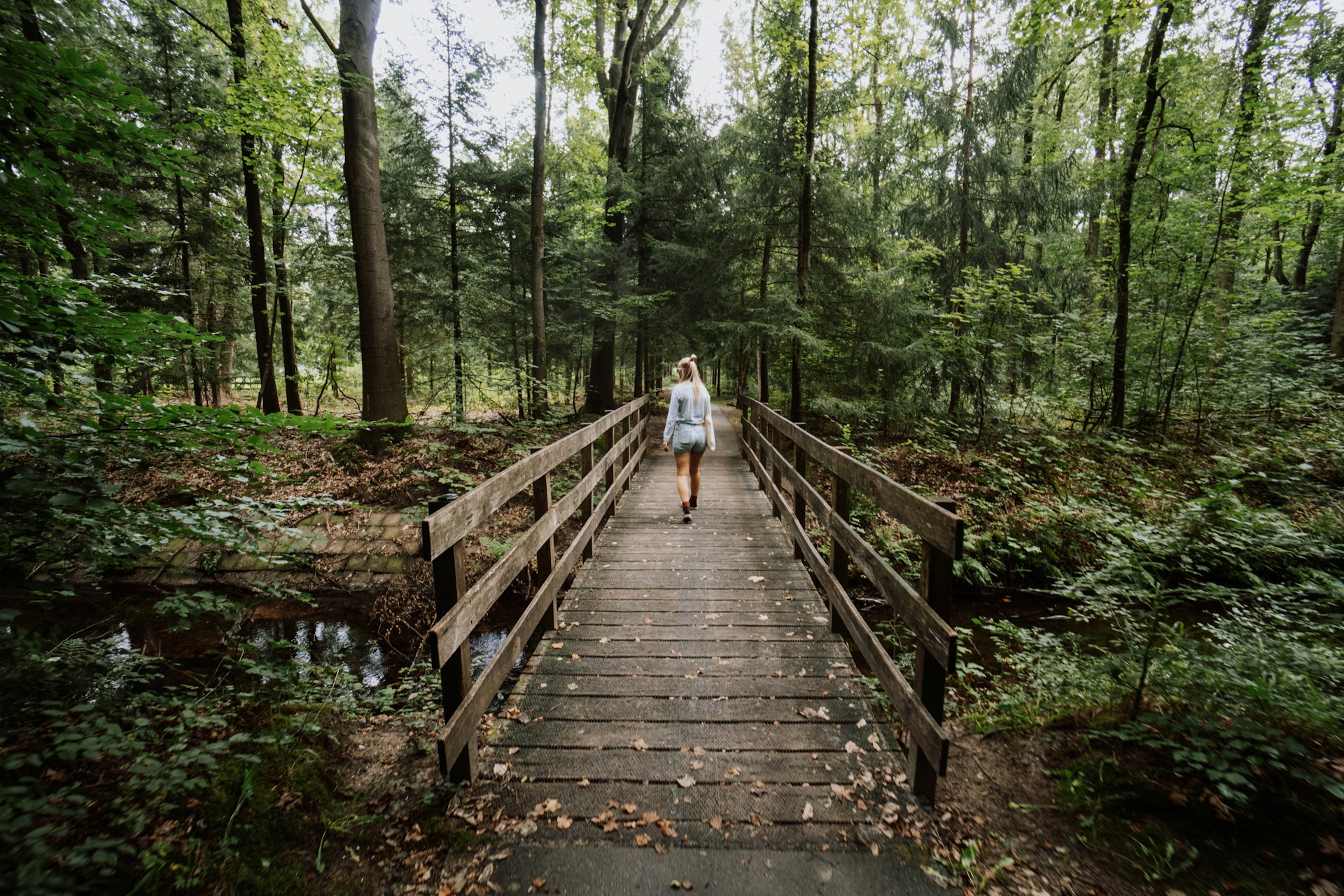
There is something deeply calming about taking a slow walk in the woods. Breathing in the fresh air, listening to the birds singing, smelling the earth, and allowing your body to slow down. Most of us intuitively feel that nature has an effect on us — but in recent years, research has also begun to confirm what many have long felt: nature can have a real impact on both mental and physical health.

Two terms that have become increasingly visible in the discussion of nature-based wellness are forest bathing and forest therapy. They are closely related, but not exactly the same.

What is forest bathing?

The term forest bathing originates from Japan, where it is called Shinrin-yoku. The word literally means "bathing in the forest atmosphere."

It's not about hiking with a goal, fitness, or performance. It's also not about getting to the top of a mountain as quickly as possible or counting steps. Forest bathing is a practice of presence.

-To slow down.
-Opening the senses.
-Being consciously present in nature.

In forest bathing, we take time to take in our surroundings through sight, hearing, smell, touch, and even taste. We listen to the wind in the trees, feel the moss under our feet, and notice how our bodies gradually begin to relax as the stressors subside.


This is a simple practice, but often very effective. It goes from thinking about nature to experiencing it. In modern society, we spend a large part of our day indoors, in front of screens and in constant stimulation. The nervous system rarely gets a real break. Nature offers us something completely different, something real that is much better for our systems and it is proven by research how good it is for us, this is not some nonsense!

When we slow down in a natural environment, the body often automatically shifts from a state of stress to one of greater calm. The breath deepens. The mind calms. The body softens.

Many people describe feeling more connected—not just to nature but also to themselves.

Maybe it's because nature demands nothing of us. It doesn't ask us to be more productive, faster, or better. It simply invites us to be.

What is forest therapy?

Forest therapy evolved from this Japanese approach. It is based on the same philosophy but is often a guided experience where a trained facilitator manages the space.

In forest therapy, a guide leads participants through gentle “invitations” that help people connect with nature in a deeper way. These are not instructions but open-ended suggestions that encourage curiosity, presence, and perception.

For example, a facilitator can invite participants to:
- walk very slowly
- notice colors and shapes
- listen to sounds in the distance
- find out how the body reacts to certain places in nature
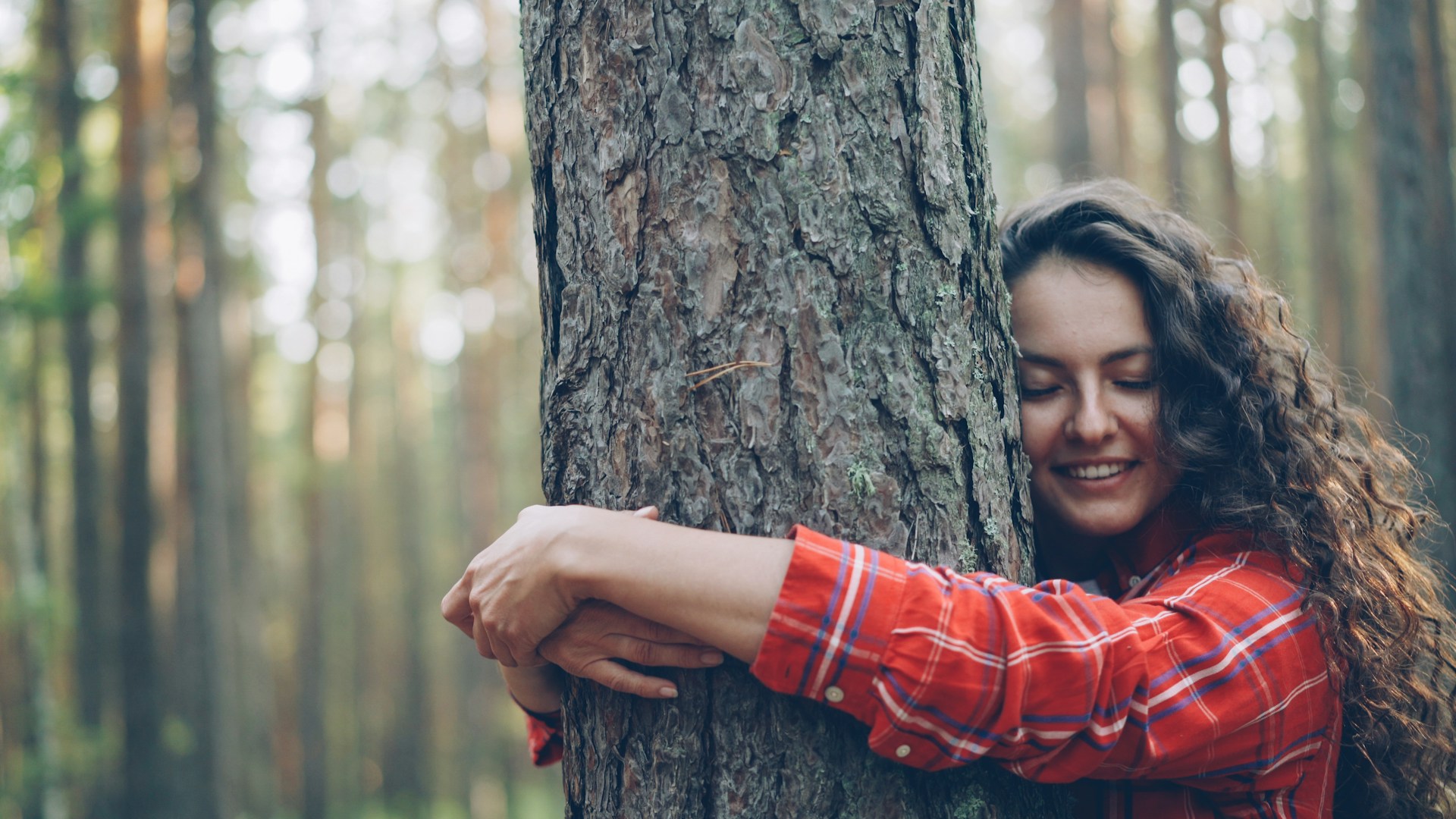
- sit in silence with a tree or landscape

The goal is not to "do the right thing", but to experience nature in its entirety.

Research and health effects

Research on Shinrin-yoku has shown links to, among other things:
- less stress
- lower cortisol
- increased relaxation of the nervous system
- improved well-being
- better sleep
- lower blood pressure
- increased well-being and connection

Dr. Qing Li, one of the world's leading experts in forest medicine, has studied the health effects of forest environments for decades. He describes forest bathing as a bridge between humans and nature—a way to reconnect with a connection that many have lost in the fast-paced world of today.

Nature as a relationship, not just a place

Perhaps one of the most beautiful aspects of forest therapy is that it can change the way we see nature. Instead of seeing it as a backdrop, a recreation, or a resource, we gradually begin to experience ourselves as a part of it. We begin to belong to nature, not separate ourselves from it. And perhaps that is precisely where the greatest healing lies! When we slow down enough to listen. Feel. Breathe. And remember that we are part of something bigger. Then the forest no longer becomes a place we visit. But a place we belong to.